
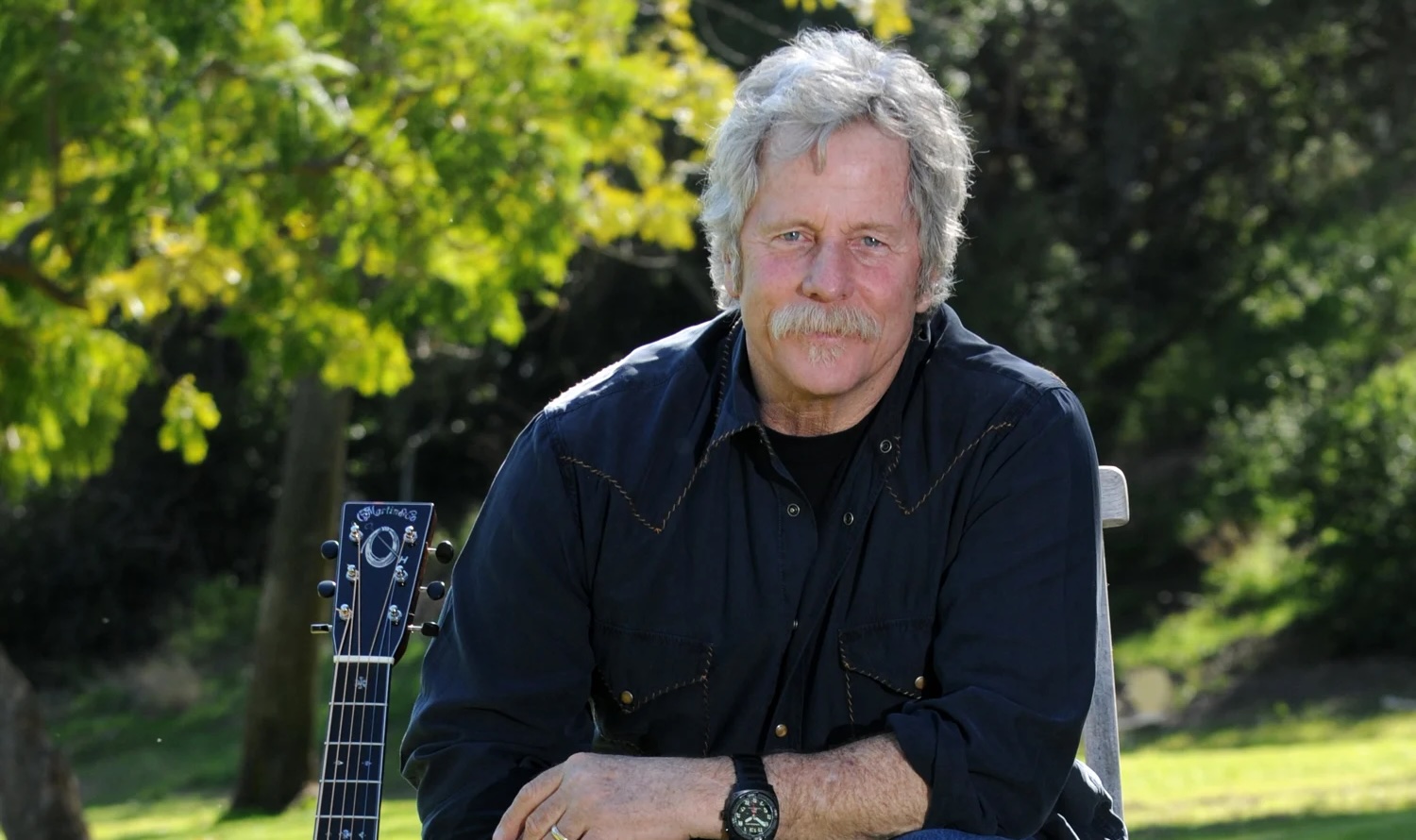
Before there was Wilco or Lucinda Williams, before Jackson Browne or the Eagles, before Willie and Waylon grew their hair long and called themselves outlaws, Chris Hillman was forging the path they would all follow. A teenage mandolin prodigy, Hillman was barely in his 20s when he founded the Byrds with Roger McGuinn, David Crosby and Gene Clark. After a series of hits that defined folk rock, Hillman recruited alt country icon Gram Parsons and steered the band closer to the country music he loved. The result—the genre-defining Sweetheart of the Rodeo—practically invented country rock, becoming a touchstone for generations of musicians to come. When Hillman and Parsons left the Byrds to found the beloved Flying Burrito Brothers, alt country was born. After a stint in Stephen Stills’ post-CSNY project Manassas, Hillman went on to gain critical and popular acclaim in the 1980s with the Desert Rose Band. In recent years, he has devoted himself to his own brand of acoustic roots music—not quite bluegrass, not quite folk, but distinctly American. He most recent release is a live album, Chris Hillman and Herb Pedersen at Edwards Barn.
You’re admired for the supporting roles you’ve played over the years, yet you’ve had a successful career as a writer and a front man, with the Desert Rose Band for instance. How have your supporting roles over the years influenced your work as a solo artist?
You know, I look at [Sweetheart of the Rodeo], at that time, in all honesty, I really was a terrible singer. You mentioned “I Am a Pilgrim”—I was awful. I didn’t know how to sing yet. I didn’t really have the confidence, and I didn’t really know how to use the voice as an instrument then. It took me a few more years to get my singing chops going. I had to put in some apprenticeship. So I learned—I learned from the best. From Vern Gosdin—who could ask for a better mentor as a singer? David Crosby, Roger McGuinn, Gene Clark. Gram was an OK singer. I can’t say he was a great singer because he wasn’t consistent, but he had soul. And then working with Stills was just a wonderful learning experience. So what I’m saying is, I was sort of like an apprentice—I was learning, listening, watching, getting tricks. Stephen taught me a lot of songwriting tricks, I gotta tell you. I have great admiration and respect for him.
You’re asked a lot about your collaboration with Gram Parsons. Did you sense at the time that what you were doing together would be so hugely influential?
I never imagined that. You have no idea what the lasting effects will be. But one thing you want to try and gear up for is something the original manager of the Byrds, Jim Dickson, taught us: He said, “Go for substance in the songs,” and he brought us “Mr. Tambourine Man.” We were trying to be the Beatles, and he brought in “Mr. Tambourine Man” and he convinced us. He said [to] go for depth; go for a song that you can listen to in 30 years and be proud of. And that was so true. Now you listen to it and you go “What a beautiful set of lyrics Dylan wrote.”
Gram and I, the stuff we wrote for the first album [The Gilded Palace of Sin], “Wheels,” “Sin City,” all of that stands up. “Sin City” was such a tongue-in-cheek song, I mean, we covered all these areas, from Robert Kennedy’s assassination, to earthquakes in California, to Vietnam, and the chorus was about this manager we had who was robbing us and he lived on the 31st floor. It was so much fun. I still get a kick out of that tune, and people still want to hear it—that’s all you can ask for.
What do you think it is about the music you made together, that, even though it never sold a lot of records, still commands such interest? Do you think it has more to do with Gram’s death, or is it the music itself?
I think it’s the music. I’m sure the mystery of his demise, so to speak (laughs), adds a little part to it, but it’s really the music. The music holds up. We were the first alternative country band. You see all these young alt country guys, and this and that—we started that thing. But I think the songs stand up, for the lyrical content and what we were doing. To us, it was really country music.
Over the last four decades, you’ve had an incredibly varied career: you’ve been on both the pop and country charts, as well being a critics’ favorite. With so many laurels to rest on, what keeps you inspired and working?
Like anybody else in any kind of business, I will have those times when I just want to do something else. But I find now in this particular time in my life that the passion I had as a 16-year-old kid learning to play has come back. I look forward to playing now, I feel it’s a blessing to be able to go out and work, and I will do it as long as I can or as long as anybody wants to see me play.
It’s great working with people and maintaining friendships with people over the years who have survived. I look back at it and I go, what an interesting life! What a lucky guy I was to be able to do all this, to be a part of the Byrds. The Byrds are probably more influential now than they were 40 years ago. Inspiring—hey, it’s fun. It’s fun again. I don’t take it for granted. There were times years ago when I didn’t realize how lucky I was and I took it for granted and I didn’t put as much as work in as I should have. But things happen for a reason. You get sort of smacked on the head by God and straightened out there. So I’m very happy right now with everything.
Last year you received the Lifetime Achievement Award from the Americana Music Association. Do you think much about your achievements, or do you prefer to keep looking forward?
I look forward. I use an old cliché—I hope my best stuff’s around the corner. I hope to be making records for a long time. I didn’t get into this for getting prizes or anything—but yeah, I like ’em. It’s a real honor. I got a nice award in London—they gave me the roots award, for bringing traditional music into rock ’n’ roll—and I saw some great old friends: Billy Wyman, Jimmy Page, people like that. I’m going, “Here’s the senior citizens, but all in good shape, all still working, all happy.” When we all got into music back then, it wasn’t limousines and money. We loved the music; that was the thing. Nobody thought about making any money; you didn’t think you were going to make a living. You just wanted to do it. And that’s what it was all about. It was about chasing that dream. You’d never think about “What am I gonna get? Am I gonna get an award, or am I gonna get a lot of money, or .…” But all of those accolades are wonderful. I’d love to get a Grammy someday. Maybe I will—maybe I’ll outlive everybody and they’ll have to give me one (laughs).
— By John Paul Keith
From Performing Songwriter Issue 88, Sept/Oct 2005







0 Comments