



















I don’t know how [songwriting] works. I have thought about this a lot and I haven’t made any progress. It’s a mystery. Which is great, actually. I like that it’s a mystery. It’s not something I can unravel. It’s like trying to figure out how we got here. It’s involved with that. It makes no more sense that the rest of it. But I do know how to screw it up. So since I know how to screw it up, I know how not to. Just don’t do those other things. Stay out of the way. For instance, when I write, I don’t stop. I don’t stop to haggle over a word or a form or a “this” or a “that.” I don’t stop. I go straight through to where the end is. Then I’ll go back. If I stop, that’s it, it’s over.
— Lou Reed

I think, for me—because I haven’t been in a horrible marriage and I don’t have delinquent children that I’m trying to get through college—I haven’t had a lot of those bad experiences that really twist people’s minds. That’s when you stop writing about love, and you stop writing about the possibility of love, and when you stop writing about the possibility of love, you are no longer relevant. I don’t really care if I get married at this point, I’m quite happy by myself, but I do live in the realm of romantic possibility. Mr. Right. It’s possible that he’s around the corner—that he could he just be driving up the street and I could have a flat tire and there he is (laughs). That allows me to write with hope.
—Stevie Nicks

I have found that there’s just meant to be cycles to creativity. There are times when you’re going to be extremely creative and times when you’re not, and I think the times you’re not heeds the next part of the cycle. And that’s definitely happened with me over and over and over again. For as long as I can remember, there were times when I just didn’t have anything to say. Or, if I did, it wasn’t ready to come out yet. So I sort of learned to endure those times and know that chances are the circle will come around again if I just try to be patient.
—Marc Cohn

I think it’s important to tell our stories – just to add it to the soup – because I think in the end it’s more flavorful than if there were only a few. Especially for people who can’t see their stories on TV or read them in history books and stand up for themselves. Their only option then, which I think is a really important first step, is to relate their own experiences. That’s all I intend to do in my songs – just tell my story and write about what I know.
—Ani DiFranco

When I got to Motown, I had an idea—I wanted to get rid of this stigma of “race music.” There were some nasty events that happened to me as a child, racial things. I figured that music could bring people together. It was that one common denominator that could get around all obstacles, all hatreds or stupid prejudices. With music, in the ’50s, I’d seen people dance, come together. I saw the beginning of something that could be good for the world. With that in mind, I started compiling ideas.
—Lamont Dozier

I think that in music there’s a oneness, there’s a sweetness. Or there can be. What I call music, anyway … the music I like. I go to it for that oneness and that sweetness. If you look at the world, there’s so much separation. There are polarities and wars. But to sense a oneness and a sweetness, I mean, that it. That was the ultimate. The best thing in life. And I did sense that in music, so that’s what is divine to me. That’s a form of the divine.
—Laura Nyro

I don’t think songwriter ever gets easier. It certainly doesn’t get any less interesting. It’s still fascinating and there’s still no easy solution with songwriting. It’s a vast skill or craft or art or whatever it may be. I never think I know how to do it, so I keep a respect for the process of writing songs.
—Steve Winwood

When I am writing a song, say, a blues song, it’s not up to me to try to make it a reggae song. Because the songs tell you, “I am a blues song. I am not a reggae song.” Maybe when it’s finished and it’s in its pure form, somebody else could take it and change it and then it will work. Because it has already become what it was meant to be. But writing a bad song and saying, well, it’s bad because it’s not reggae, or it’s not blues or it’s not a ballad, that doesn’t make much sense. Because a song is what it is. It also sets its own tempo. It tells you what pace it should be taken at. And it also sets its own key.
—Joan Armatrading

I’d like to believe, whether it’s true or not, that I’m getting better—or at least that I’m not getting worse. Music is so complicated that it’s something you can always get better at. I don’t understand the fact that most singer-songwriters in pop music do their best work at a young age. If I thought that were true about me, I’d just do something else.”
—Randy Newman

I never thought I could sing. Doo would come in from working and catch me rocking my babies to sleep. And I would be singing, “I’m dreaming of a White Christmas …” (laughs). That was the only song that I could sing to them that would make them go to sleep. He came in one night and said, “Loretta, I’ve got an idea.” I thought, “Oh, Lord.” He said, “I’m going to go down the road to this little club and get you a job singing.” I said, “Doo, I can’t sing.” He said, “Yes, you can. I’ve been listening to the radio, and all these other singers that I hear can’t sing no better than you.” And he said, “After about two years on the road, we can buy us a home and settle down and we won’t ever have to worry about it anymore.” Well, my goodness, after two years, I was still having a hard time frying a hamburger (laughs).
—Loretta Lynn

“You’re never quite sure where the song is going, because you might not find the word to rhyme with the end of the line. You have to find associative meaning to get you there. So it’s rather like doing a crossword puzzle backwards. A kind of strange, three-dimensional, abstract crossword puzzle.”
—Annie Lennox

“There’s a feeling when I’m on to an idea and making something up that’s almost a momentum that carries me and I find pushes me into the next verse. It’s not really a matter of doing an outline. And you know in school we were always taught to do an outline, and I never did that. I’d always make up my outline after I finished whatever it was that I was writing. And that’s the fun of writing and making something up—kind of getting inside of it and letting it carry you through.”
—Lyle Lovett

“You don’t want to be held back because of a lack of technique. Technique is practice. But technique is not where it’s at. Where it’s really at is what you do with what you got. The key to it is to say something with your instrument, so it’s like a conversation. You’re getting a message across. If the fellow you’re speaking to is very intelligent, you can get more technical. But if he’s not particularly intellectual, you realize this, and you don’t try to educate the man, but you try to talk to him on his terms.”
—Les Paul
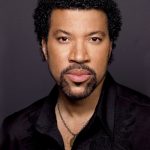
“The easiest thing to write is a difficult song. Just play a bunch of chords and hit a bunch of melodies. OK, congratulations, you’re a songwriter. Now, can you write a song that people can name in four notes? If you can do that, you, my friend, have done the hardest thing in the world: You’ve written a simple song (laughs). If I sing, ‘You’re once …’ and stop right there, you know the song [‘Three Times a Lady’]. You never heard a chord, a drumbeat or a cymbal crash, but you know where we’re going.”
—Lionel Richie

“Songs are architectural, living, changing aural environments. It’s difficult to disassemble them. Some lines are just a part of your life—you sing them over and over again. But for the most part, the songs that I don’t use don’t get found anywhere. They are rather developers, things that lead to other, better songs, hopefully. But you have to write them; they are part of the building blocks. They take you there.”